
Structural Comparison Guide for Brands, Distributors & OEM Buyers
Introduction
When developing or sourcing a hair dryer brush product line, one of the most common decisions brands and distributors face is whether to choose a round hair dryer brush or a rotating hair dryer brush.
Although both designs serve similar styling purposes, they differ significantly in structure, usage behavior, cost structure, and market positioning. Understanding these differences is essential for brands, wholesalers, and OEM buyers who want to build a sustainable and competitive product lineup.
This page compares round and rotating hair dryer brushes from a manufacturer and professional market perspective, helping B2B buyers determine which design best fits their target customers and sales channels.
What Is a Round Hair Dryer Brush?
A round hair dryer brush uses a fixed, non-rotating brush barrel combined with heated airflow. Styling results are achieved through manual rotation and control by the user.
Key Structural Characteristics
-
Fixed round barrel design
-
No internal drive system
-
Simple mechanical structure
-
Heat and airflow distributed evenly through the barrel
Market Positioning
From a manufacturing and sales perspective, round hair dryer brushes are typically positioned as:
-
Core, high-volume models
-
Entry to mid-range price segments
-
Foundational SKUs in most styling tool product lines

What Is a Rotating Hair Dryer Brush?
A rotating hair dryer brush features a motor-driven barrel that rotates automatically, assisting the user during styling.
Key Structural Characteristics
-
Built-in rotation motor and transmission system
-
Automatic left/right rotation control
-
More complex internal structure
-
Higher mechanical and electronic integration
Market Positioning
In professional and brand portfolios, rotating hair dryer brushes are commonly positioned as:
-
Upgraded or value-added models
-
Mid-to-high-tier product extensions
-
Differentiation products rather than mass-volume SKUs
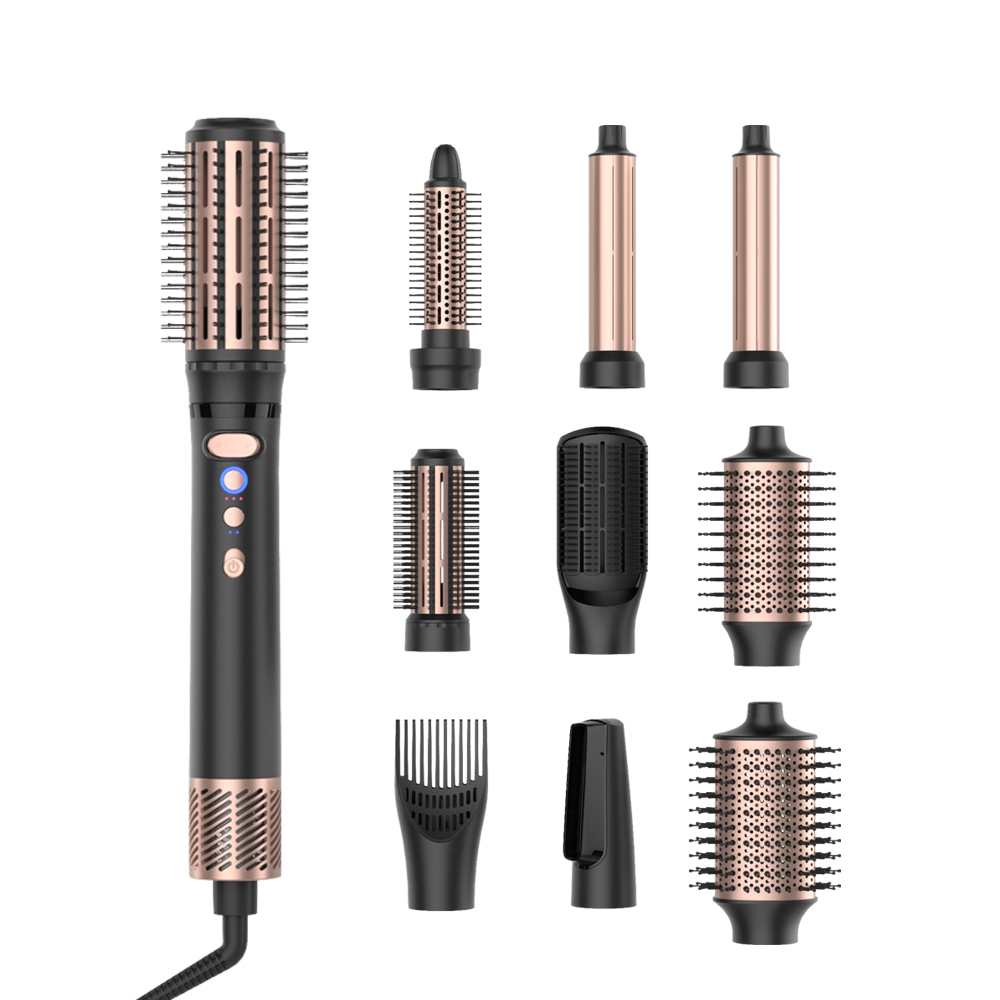
Structural Differences at a Glance
| Aspect | Round Hair Dryer Brush | Rotating Hair Dryer Brush |
|---|---|---|
| Barrel Movement | Manual | Automatic rotation |
| Internal Structure | Simple | More complex |
| Manufacturing Cost | Lower | Higher |
| User Control | Fully manual | Assisted rotation |
| Maintenance Complexity | Low | Medium |
| Product Tier | Entry to mid-range | Mid to high-range |
Performance & Usage Behavior Comparison
Ease of Use
-
Round brushes rely more on user technique and control.
-
Rotating brushes reduce manual effort, especially for beginners or casual users.
Styling Precision
-
Round brushes offer greater manual precision for experienced users.
-
Rotating brushes offer consistent, repeatable motion, which some users prefer.
Reliability Under High-Frequency Use
From a professional market standpoint:
-
Round designs generally offer higher long-term mechanical reliability due to fewer moving parts.
-
Rotating designs require stronger quality control to ensure durability of motors and drive systems.
Manufacturing & Cost Considerations
Round Hair Dryer Brushes
-
Lower BOM cost
-
Faster production cycles
-
Easier quality control
-
Lower after-sales risk
Rotating Hair Dryer Brushes
-
Higher BOM and assembly complexity
-
More stringent testing requirements
-
Higher perceived value in retail channels
-
Greater differentiation potential
For OEM buyers, this difference directly affects pricing strategy, MOQ planning, and target market selection.
Which Design Fits Your Market Better?
Choose a Round Hair Dryer Brush If:
-
Your focus is high-volume sales
-
You target entry-level or mass-market consumers
-
You want lower production and logistics risk
-
You prefer simpler product certification and compliance
Choose a Rotating Hair Dryer Brush If:
-
You want to offer premium or feature-enhanced models
-
Your market values ease of use and automation
-
You are building a multi-tier product lineup
-
You aim to differentiate from basic competitors
Many brands choose to offer both designs to cover different price segments and user preferences.
Professional & B2B Selection Logic
For brands, distributors, and OEM partners, the decision between round and rotating hair dryer brushes should be guided by:
-
Target market price sensitivity
-
User skill level and expectations
-
Product line structure (core vs extension SKUs)
-
Manufacturing consistency and long-term reliability
-
After-sales and quality control strategy
Rather than asking “which is better,” professional buyers benefit more from asking “which is better for this market and positioning?”
Integration into a Scalable Product Line
From a manufacturing perspective:
-
Round brushes are often used as base models
-
Rotating brushes are added as premium or upgrade SKUs
This structure allows brands to:
-
Expand product lines without cannibalization
-
Address broader customer segments
-
Improve overall SKU profitability
Conclusion
Both round and rotating hair dryer brushes play important roles in professional and commercial markets.
The key difference lies not in which design is “better,” but in how each design fits a brand’s product strategy, cost structure, and target audience.
For OEM and wholesale buyers, understanding these structural and market differences helps ensure better product planning, smoother manufacturing, and stronger long-term performance.
If you’re unsure whether to choose a round brush or a rotating brush, check out our Complete Guide for a detailed comparison.