The Brief That Landed on Our Engineering Desk
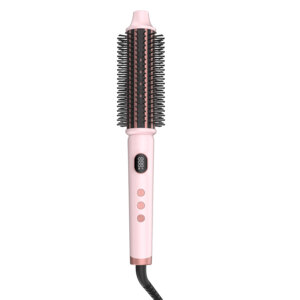
It was early 2022. A growth-stage German beauty brand reached out with a product development request. They were selling hair styling tools through their own D2C website and had built a loyal customer base through influencer partnerships on Instagram and TikTok.
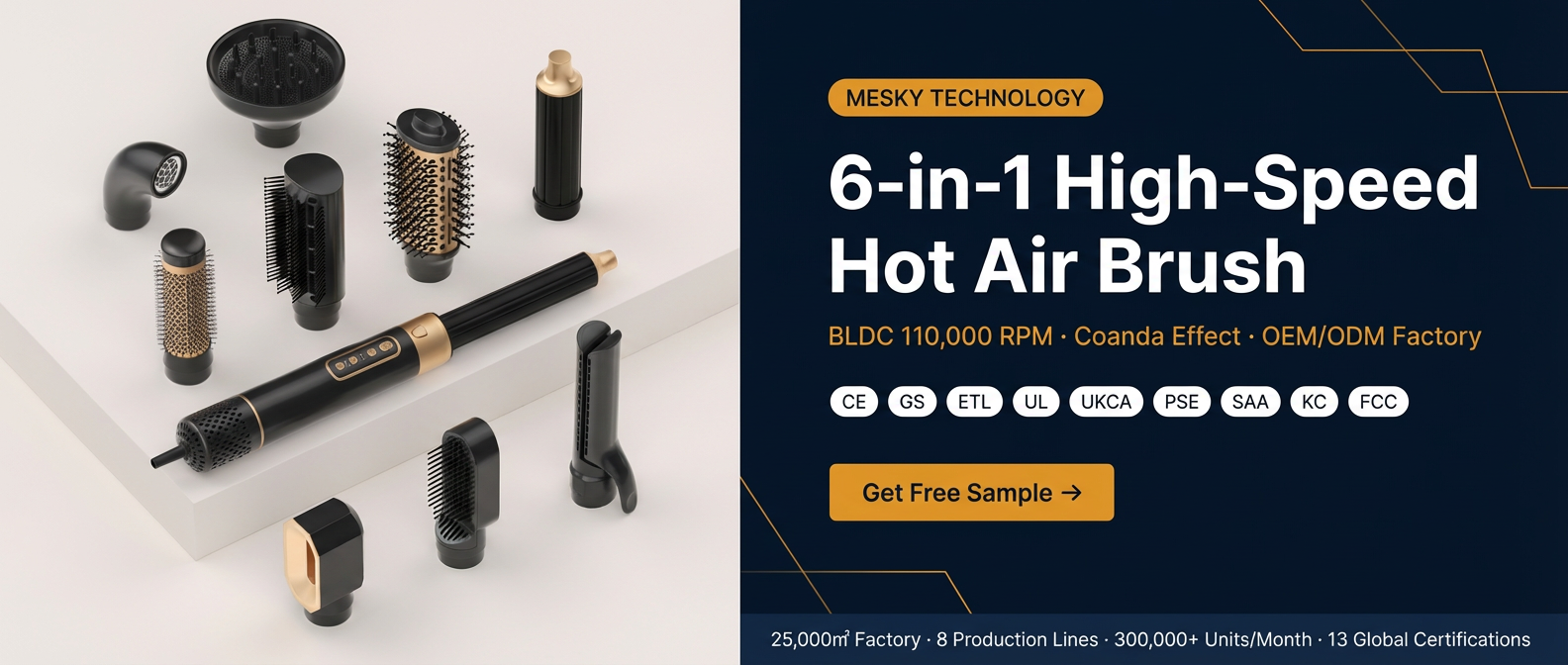
Their products were performing well — but they had a problem. Their existing supplier could not keep up with demand. Quality was inconsistent, and their hero product — a high-speed hot air brush — was accumulating negative reviews for motor noise and attachment durability. They needed a new manufacturing partner. Fast.
— Head of Product, German Beauty Brand
The client came with three non-negotiable requirements:
- Low-noise motor — German consumers are extremely sensitive to product noise; existing reviews complained about “loud, cheap-sounding” competitors.
- CE + GS dual certification — GS (Geprüfte Sicherheit) is a voluntary but commercially essential safety mark for the German market; most factories cannot obtain it.
- Fast turnaround — An influencer campaign was locked in for Q4; missing the window meant losing €500,000+ in potential revenue.
Most factories told them 5–6 months minimum. We committed to 3.
Phase 1 — Engineering Teardown & Root Cause Analysis
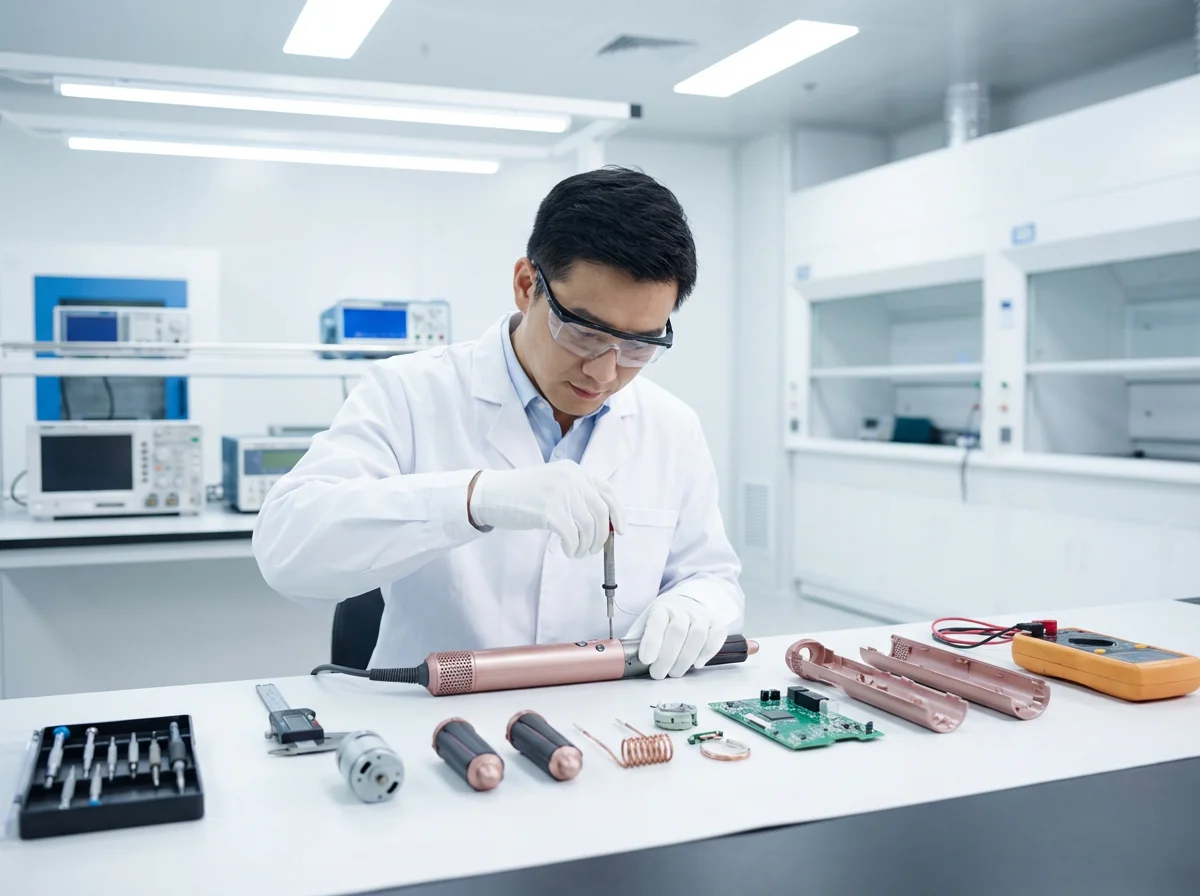
Before touching a single mold, our R&D team requested the client’s current product for a full teardown. This is standard Mesky protocol: we never start designing until we understand what we are replacing and why it failed.
| Component | Issue Identified | Severity |
|---|---|---|
| Magnetic attachment interface | 0.3mm tolerance gap → wobble during use | High |
| Airflow channel geometry | Turbulent airflow → excess noise at motor output | High |
| Heating element layout | Uneven distribution → hot spots on barrel head | Medium |
| Handle material | Hard plastic → hand fatigue after 15 mins use | Low |
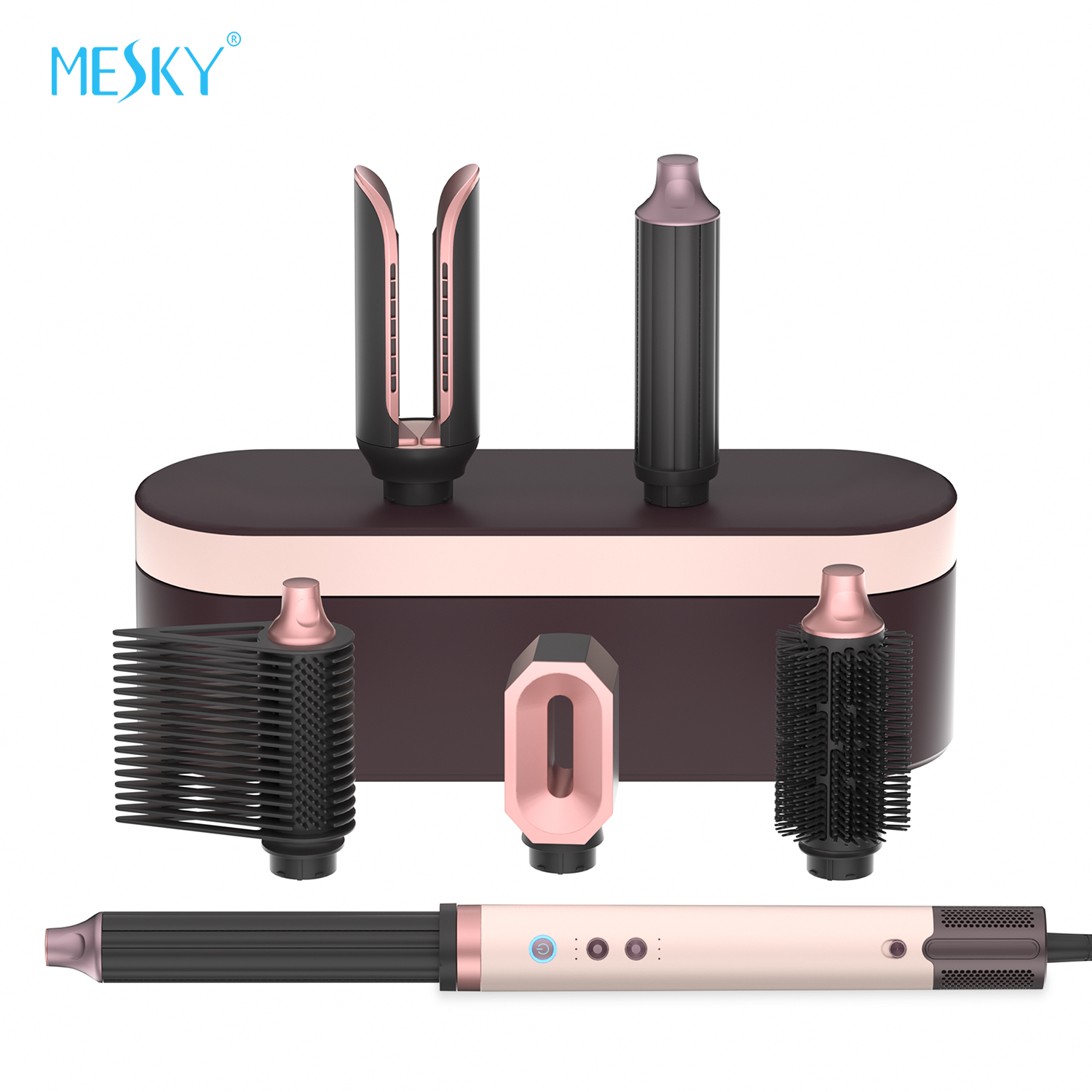
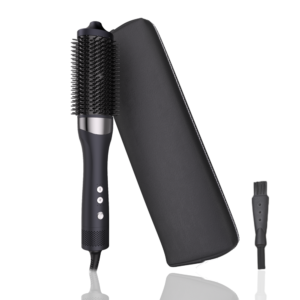
Three out of four issues were manufacturing precision failures, not design failures. We selected the MK-327B platform as our development base and customized it to address all three critical issues.
Phase 2 — Mold Development: Where Most Factories Lose Time
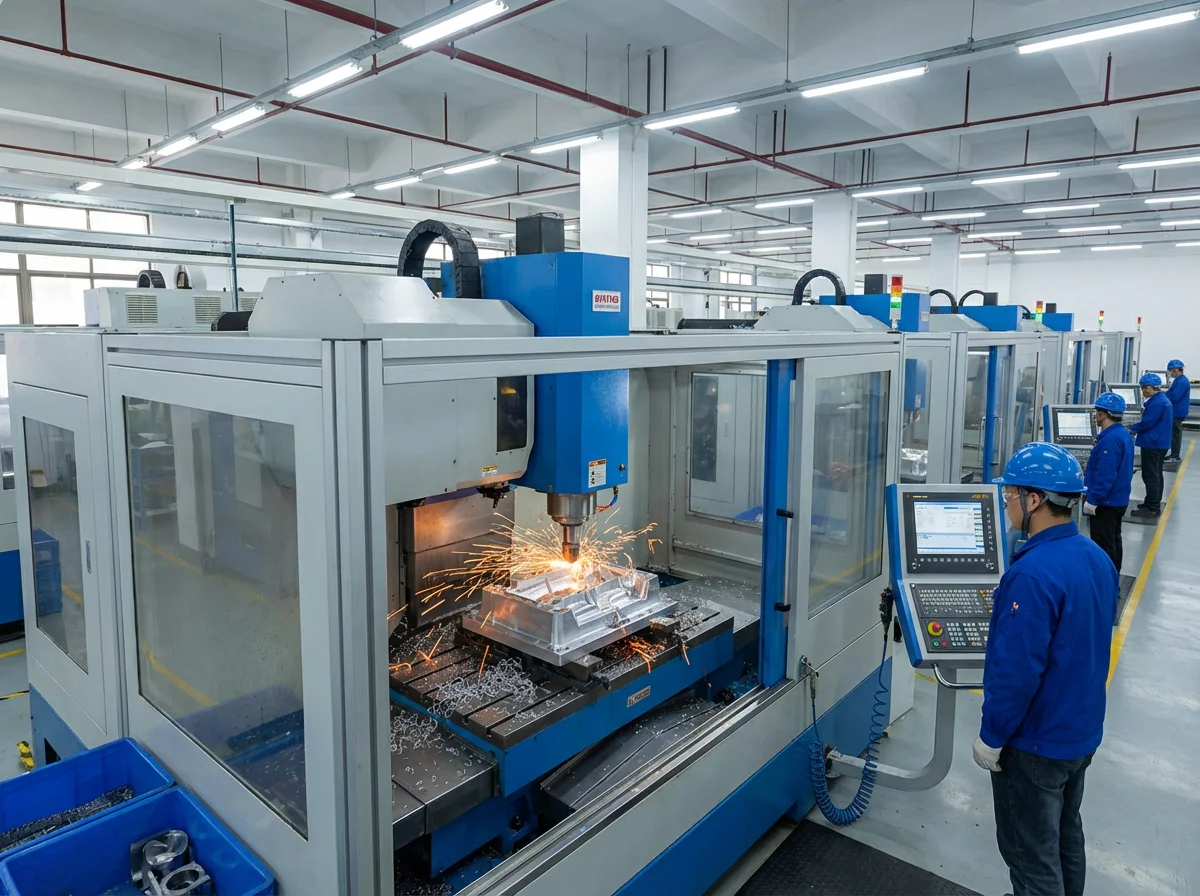
Mold development is where most OEM projects either succeed or quietly die. The industry average for a product at this complexity level: 60–75 working days. We completed it in 45 working days. Here is how:
Decision 1: In-House CNC Tooling
Mesky operates its own CNC machining center on-site. We do not outsource mold cutting to third-party shops — eliminating the most common source of delay: the communication gap between design and manufacturing.
Decision 2: Parallel Tolerance Testing
While the primary mold was being cut, our QC team ran tolerance simulations on CAD models. By the time the physical mold was ready, we already knew the dimensional targets. First-article inspection passed on the second attempt.
Decision 3: Pre-Qualified Supply Chain
Material suppliers for ABS housing, ceramic heating elements, and BLDC motor units were pre-audited and stocked. Zero procurement delays.
| Mold Parameter | Industry Target | Mesky Achieved |
|---|---|---|
| Attachment interface tolerance | ≤ 0.1mm | 0.05mm |
| Airflow channel surface roughness | Ra ≤ 1.6 | Ra 0.8 |
| Housing wall thickness variance | ± 0.2mm | ± 0.08mm |
| Mold completion time | 60–75 days | 45 days ✓ |
Phase 3 — Sample Production & Validation
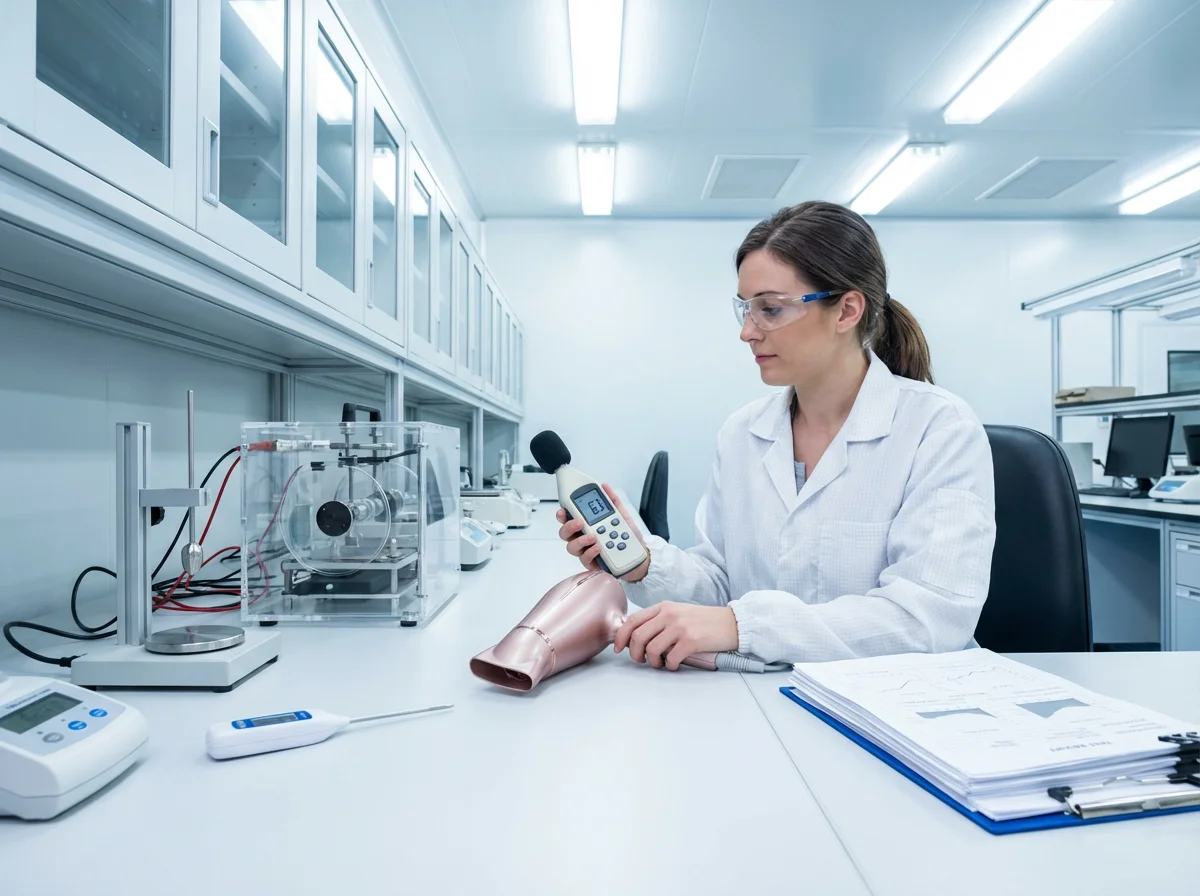
Five engineering samples were produced on our pilot Line 4 under controlled conditions. We do not just test to pass certifications — we test to simulate real-world abuse, especially for the demanding German market.
| Test Item | Industry Standard | Mesky Protocol | MK-327B Result |
|---|---|---|---|
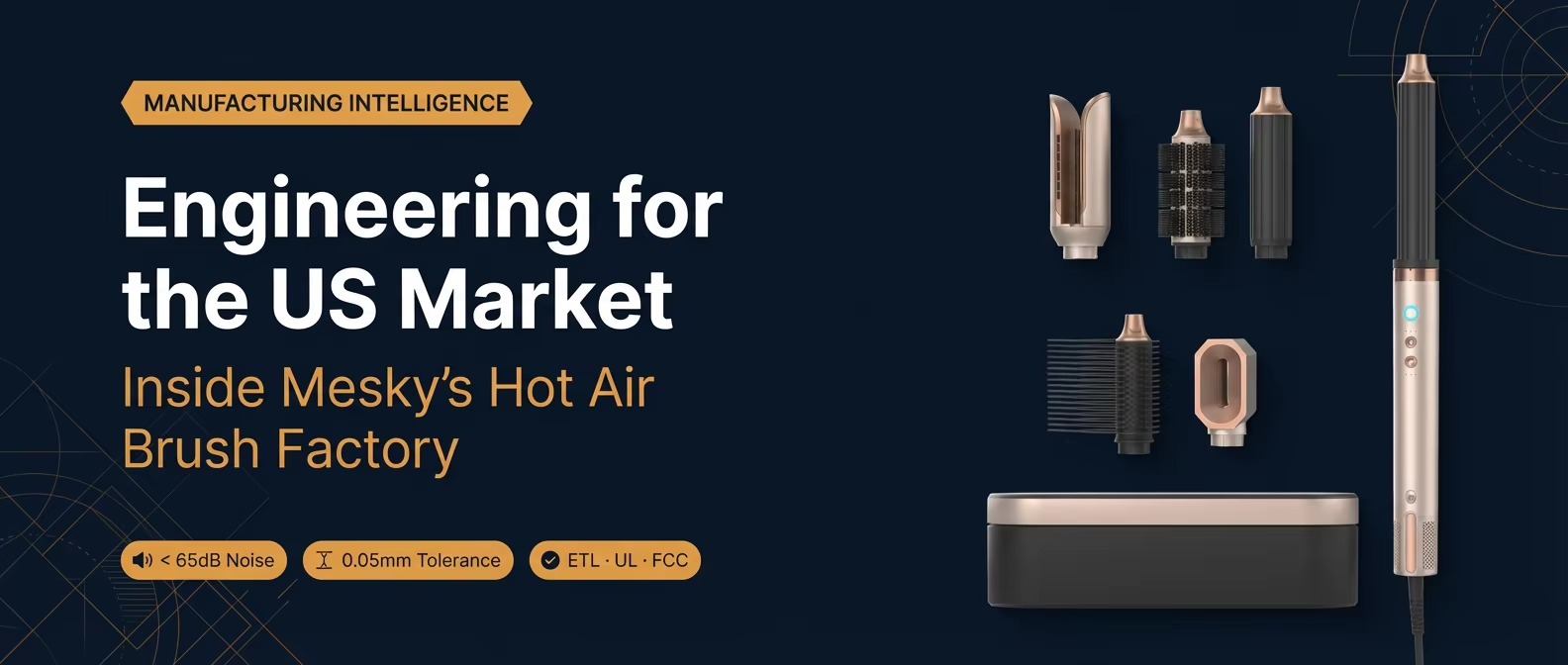
| Motor noise (operating) | < 80 dB | Test at 3 distances | < 65 dB at 1m ✓ |
| Barrel surface temperature | < 130°C | All 6 heads independently | 120°C max ✓ |
| Attachment cycle durability | 5,000 cycles | 10,000 cycles (2× standard) | 8,200 cycles ✓ |
| Drop test | 1.8m | 5 drops, 3 orientations | Pass all ✓ |
| Continuous operation | 30 min | 4-hour stress test | No shutdown ✓ |
Three samples were shipped to Germany. Client feedback returned in 48 hours: four items confirmed, one revision requested — softer handle grip. We applied a matte soft-touch coating and received written approval on Day 4 of Week 12.
Phase 4 — Certification: The GS Advantage
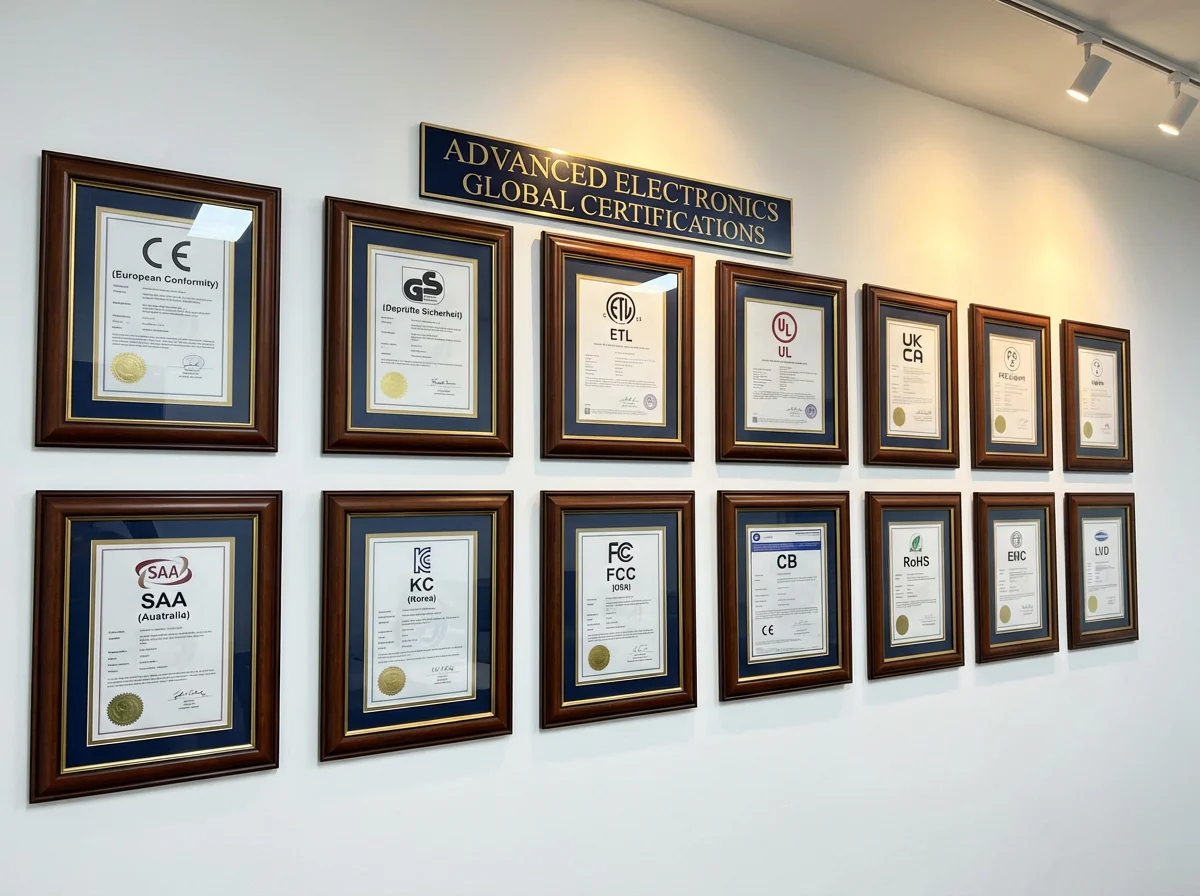
CE certification gets your product legal entry into Germany. GS certification gets your product onto retail shelves.
GS (Geprüfte Sicherheit — “Tested Safety”) is awarded by third-party institutes such as TÜV and requires testing beyond the CE baseline. The testing window typically takes 6–8 weeks.
We started the GS certification process in Week 3 — parallel to mold development, not after sample approval. This scheduling decision saved approximately 6 weeks of total project time.
Phase 5 — Mass Production & Delivery
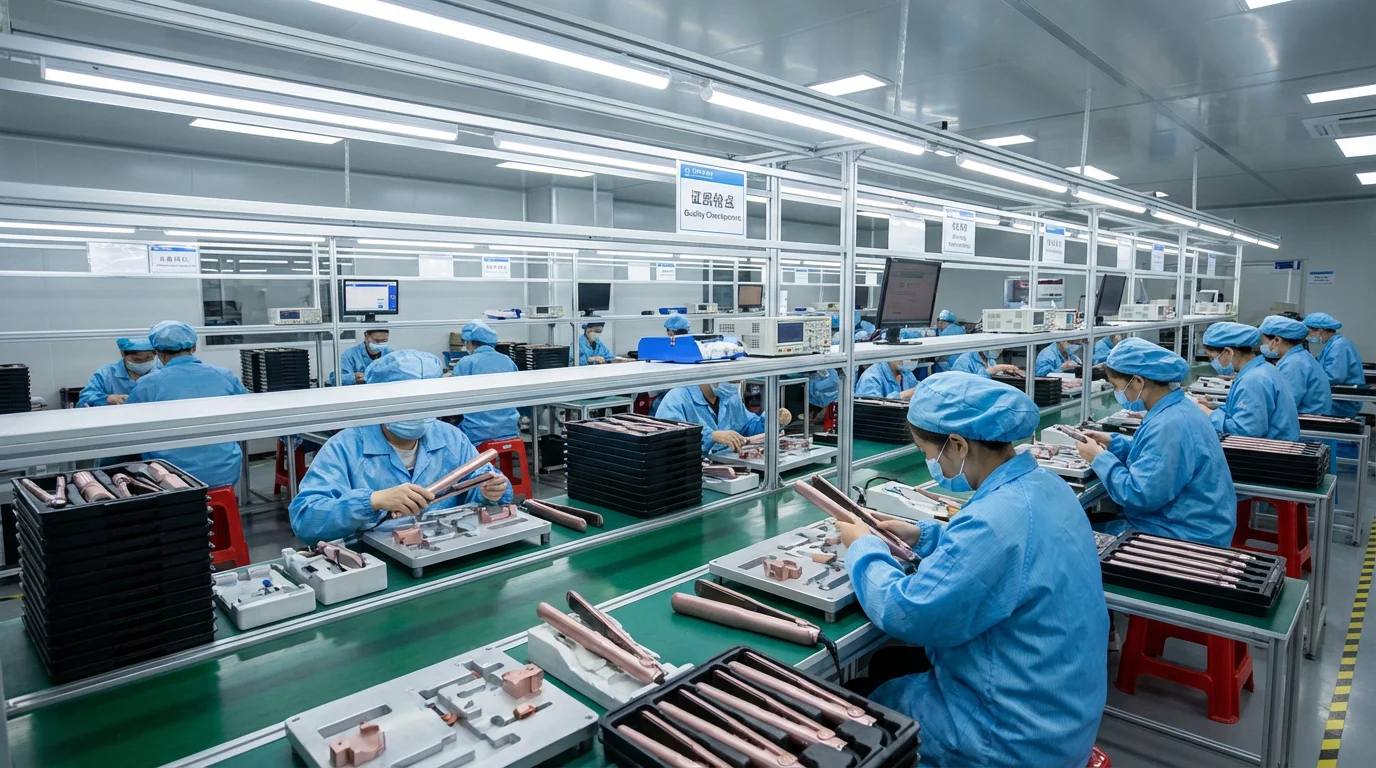
With certifications secured and final samples approved, Line 4 opened for mass production on Day 1 of Month 3.
- Line configuration: 8 workstations (assembly → QC → packaging), dedicated line
- Rated capacity: 600 units/day
- QC protocol: 100% aging test + AQL 2.5 sampling + 20% final random inspection
| Production Milestone | Scheduled | Actual |
|---|---|---|
| Line setup & material staging | Month 3, Day 1 | Month 3, Day 1 ✓ |
| First 10,000 units off line | Month 3, Week 2 | Month 3, Day 12 ✓ |
| Full batch (15,000 units) complete | Month 3, Week 3 | Month 3, Day 19 ✓ |
| QC passed & carton sealed | Month 3, Week 4 | Month 3, Day 23 ✓ |
| Container departed Shenzhen | Month 3, Day 28 | Month 3, Day 28 ✓ |
The Outcome: What the Numbers Say
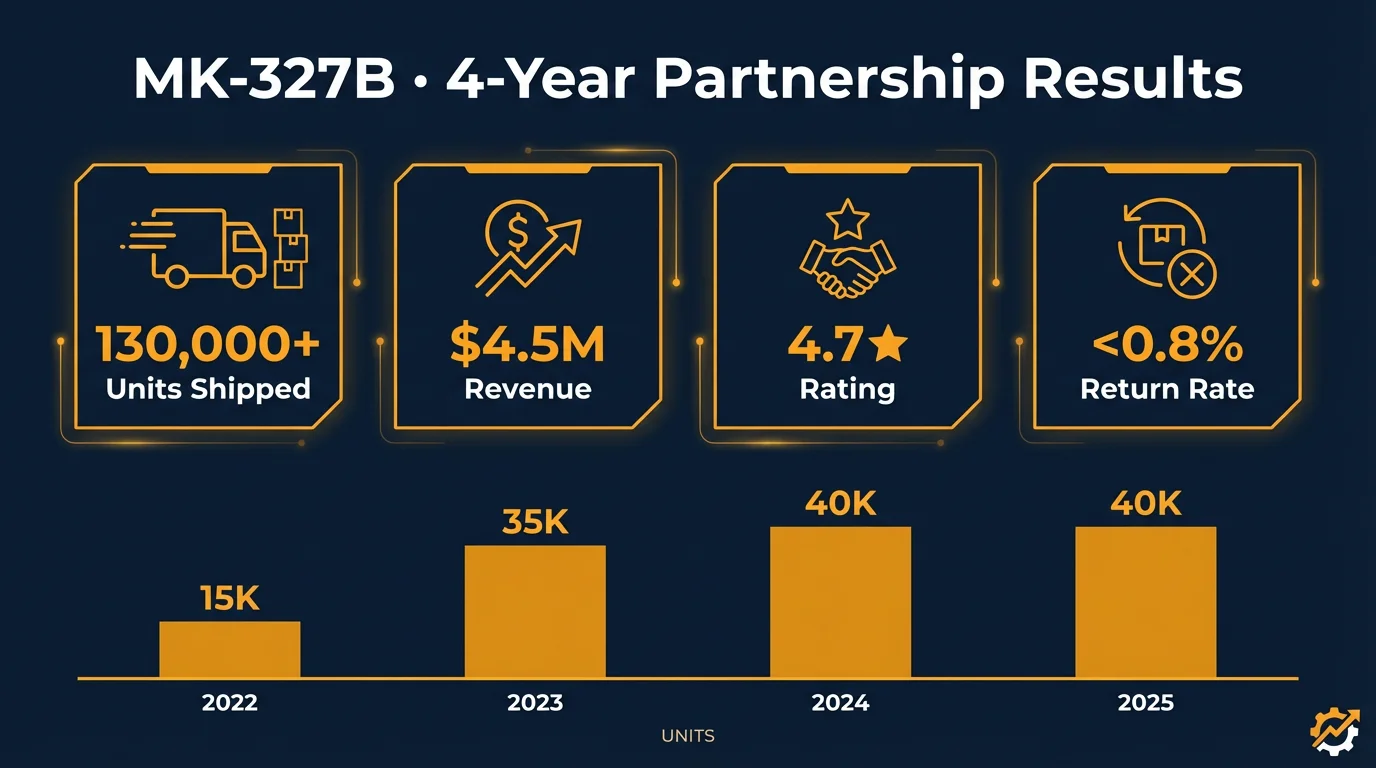
The MK-327B launched on the client’s German D2C website in Q4 2022, timed perfectly with an influencer campaign involving three beauty creators with a combined audience of 2.1 million followers.
| Year | Units Ordered | Est. Retail Revenue |
|---|---|---|
| 2022 | 15,000 units | ~$800K |
| 2023 | 35,000 units | ~$950K |
| 2024 | 40,000 units | ~$1.2M |
| 2025 | 40,000 units | ~$1.55M |
| Total | 130,000+ units | ~$4.5M USD |
The client has not issued a single formal quality complaint in four years of production. The MK-327B remains their best-selling SKU.
What Made This Project Work: A Manufacturing Perspective
⚙️ Parallel Process Architecture
Mold development, certification, and material procurement ran simultaneously — not sequentially. Sequential processing is the default at most factories. We treat it as a last resort.
🎯 Owning the Precision Gap
The 0.05mm tolerance on the attachment interface was the single most impactful improvement in the entire project — a 6× improvement over the previous supplier’s 0.3mm gap. It was also the hardest to achieve and the least visible to the end consumer, which is exactly why most factories do not bother.
🏆 Certification as a Product Feature
GS certification is not paperwork. In the German market, it is a purchase trigger. We invested in obtaining it proactively, in parallel, at our cost — because we understood what it would mean for our client’s sell-through rate.
Build Your Next Product with Mesky
We operate a 25,000㎡ facility in Shenzhen with 8 production lines and 300,000+ units monthly capacity.
- Full OEM/ODM development — concept to mass production
- In-house CNC mold tooling — no outsourcing, no delays
- 13 international certifications: CE · GS · ETL · UL · UKCA · PSE · SAA · KC · FCC · CB · RoHS · EMC · LVD
- MOQ from 500 units | Scalable to 300,000+ / month
- Dedicated project engineer assigned per account
- Sample production in 3 days (from approved tooling)
Contact Our Engineering Team →
Last Updated on 09/16/2026 by sales04