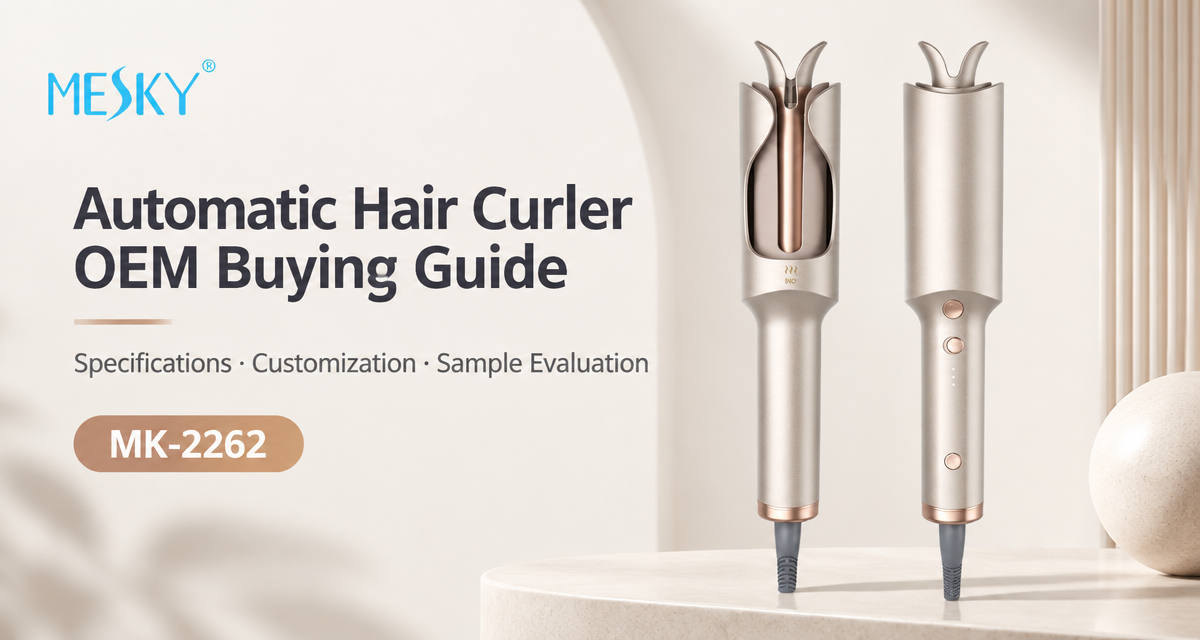
Sourcing an automatic hair curler for your brand involves more than choosing a design and adding a logo. Product specifications, styling experience, packaging, documentation, and production requirements all need to fit your target market.
For beauty brands, importers, and distributors, a clear evaluation process makes supplier quotations easier to compare and helps identify issues before a bulk order.
This guide covers the key steps in selecting an automatic hair curler, confirming OEM customization, evaluating samples, and preparing for production.
1. Define Your Requirements Before Requesting a Quote
Prepare a short sourcing brief so suppliers can recommend suitable models and quote against the same requirements.
| Information | What to Specify |
|---|---|
| Target market | Countries where you intend to sell |
| Sales channel | Retail, e-commerce, salon distribution, or wholesale |
| Product format | Preferred curling mechanism, barrel size, and corded or cordless design |
| Electrical configuration | Required voltage, frequency, and plug type |
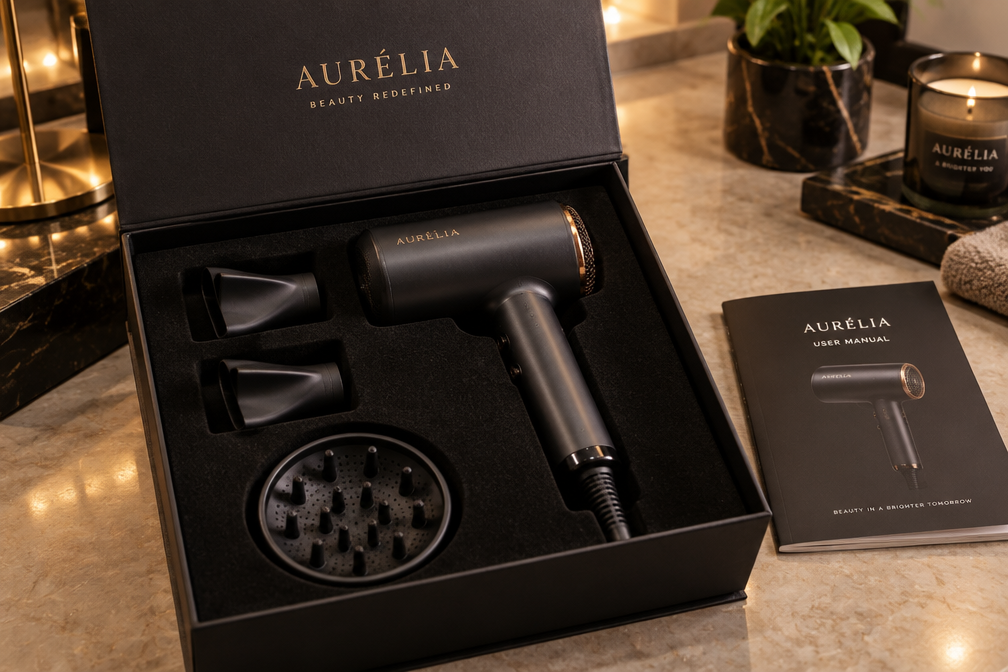
| Branding | Logo, product color, packaging, and manual requirements |
| Order quantity | Estimated first order and quantity per configuration |
| Launch schedule | Desired sample approval and delivery dates |
| Documentation | Supporting documents required for your market and sales channel |
If a specification is undecided, explain your product positioning and intended use. Ask the supplier to identify existing options and explain which changes require additional development.
2. Compare Configurations, Not Just Product Photos
Automatic hair curlers can look similar while using different curling mechanisms, controls, and electrical configurations.
When comparing models, review:
- How hair is loaded, wrapped, and released.
- Barrel or curling chamber dimensions.
- Temperature settings and controls.
- Curl direction options.
- Timer functions and audible alerts.
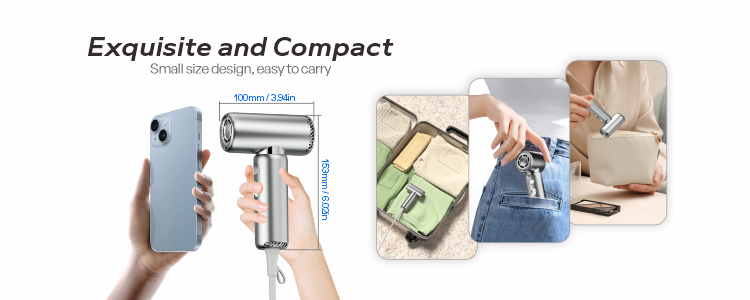
- Product dimensions, weight, and cord length.
- Rated voltage, frequency, power, and plug type.
- Shutdown and hair-release functions described in the manual.
Confirm that the published specifications, quotation, and sample refer to the same version. A feature offered on one configuration may be optional or unavailable on another.
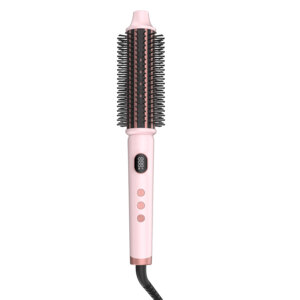
For a model-specific example, review the MK-2262 32mm Automatic Hair Curler. Its specifications provide a starting point for discussing your preferred configuration and private label requirements.
3. Confirm the Scope of OEM Customization
“Customization available” can describe anything from logo printing to changes in packaging or product configuration. Ask the supplier to separate existing options from modifications that require development.
| Customization Area | Questions to Ask |
|---|---|
| Logo | Which application methods and positions are available? |
| Color and finish | Can you select an existing finish or request a custom color? |
| Packaging | Can the supplier work with your artwork and preferred box format? |
| Instructions and labels | Which languages and market-specific details can be supported? |
| Plug and voltage | Which configurations are available for the selected model? |
| Accessories | What is included, and which additions require separate confirmation? |
| Product modifications | Would the change affect tooling, testing, cost, or production timing? |
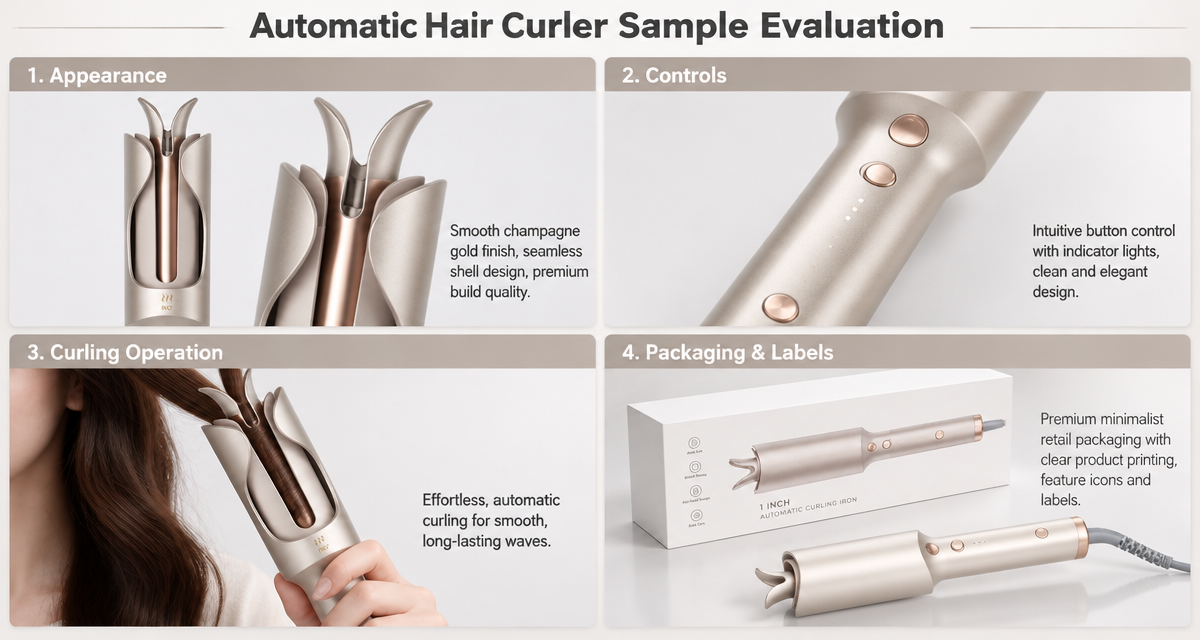
Before commissioning a customized sample, request a written summary of the scope, charges, and approval steps.
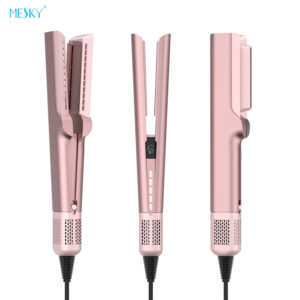
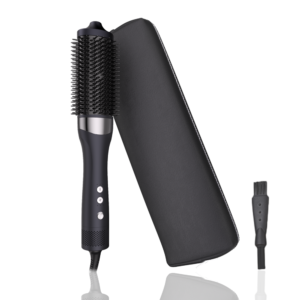
If your project involves developing a wider styling collection, explore the MESKY hair curler range to compare available product formats.
4. Evaluate Samples Before Approving a Bulk Order
First, establish what type of sample you are receiving:
- Standard sample: Used to evaluate the existing product.
- Customized sample: Used to review agreed branding, appearance, or packaging changes.
- Pre-production sample: Used to confirm the configuration intended for production.
A standard sample can help you select a model, but it does not confirm every detail of your final branded order.
Follow the product instructions during evaluation and use a repeatable method to make comparisons meaningful.
Automatic Hair Curler Sample Evaluation Checklist
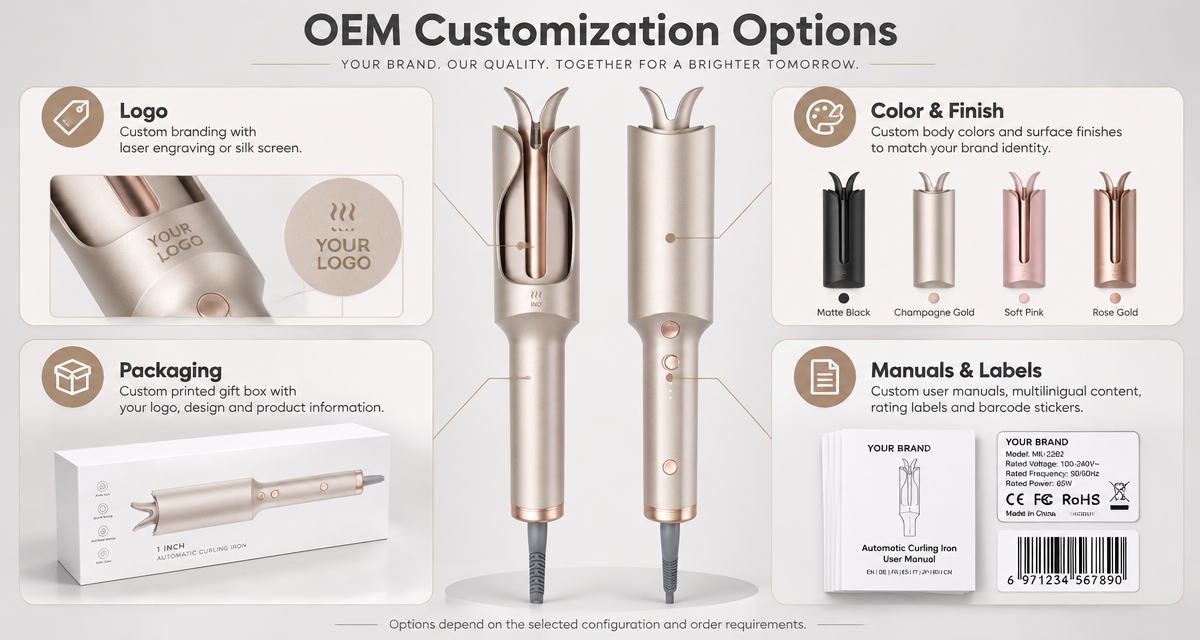
| Check | What to Review | What to Record |
|---|---|---|
| Model and configuration | Confirm the sample matches the requested version | Model, voltage, plug, and supplied accessories |
| Appearance | Inspect housing, finish, joints, and visible defects | Photos and observations |
| Controls | Check button labels, setting selection, and indicators | Unclear or inconsistent behavior |
| Handling | Assess grip, balance, cord movement, and access to controls | Evaluator feedback |
| Curling operation | Follow the specified loading, curling, and release procedure | Ease of operation and any interruptions |
| Styling result | Compare results using a consistent method | Hair condition, section size, setting, duration, and photos |
| Stated functions | Review functions according to the manual or an agreed procedure | Results and questions for the supplier |
| Branding and packaging | Check artwork, labels, inserts, and included items | Corrections required before approval |
Keep styling comparisons consistent. Hair condition, section size, temperature, timing, and technique can all affect the result.
Do not deliberately create tangles or perform improvised electrical tests. Routine sample evaluation does not replace formal safety or compliance testing. Where specialist testing is needed, agree on the scope and use qualified personnel or a suitable laboratory.
Keep a Sample Evaluation Record
Use a simple record for each sample:
- Model and configuration.
- Date received and evaluation date.
- Test conditions.
- Photos or video.
- Observations and requested changes.
- Supplier responses.
- Approval status.
This gives your purchasing, product, and quality teams a shared reference when confirming the order.
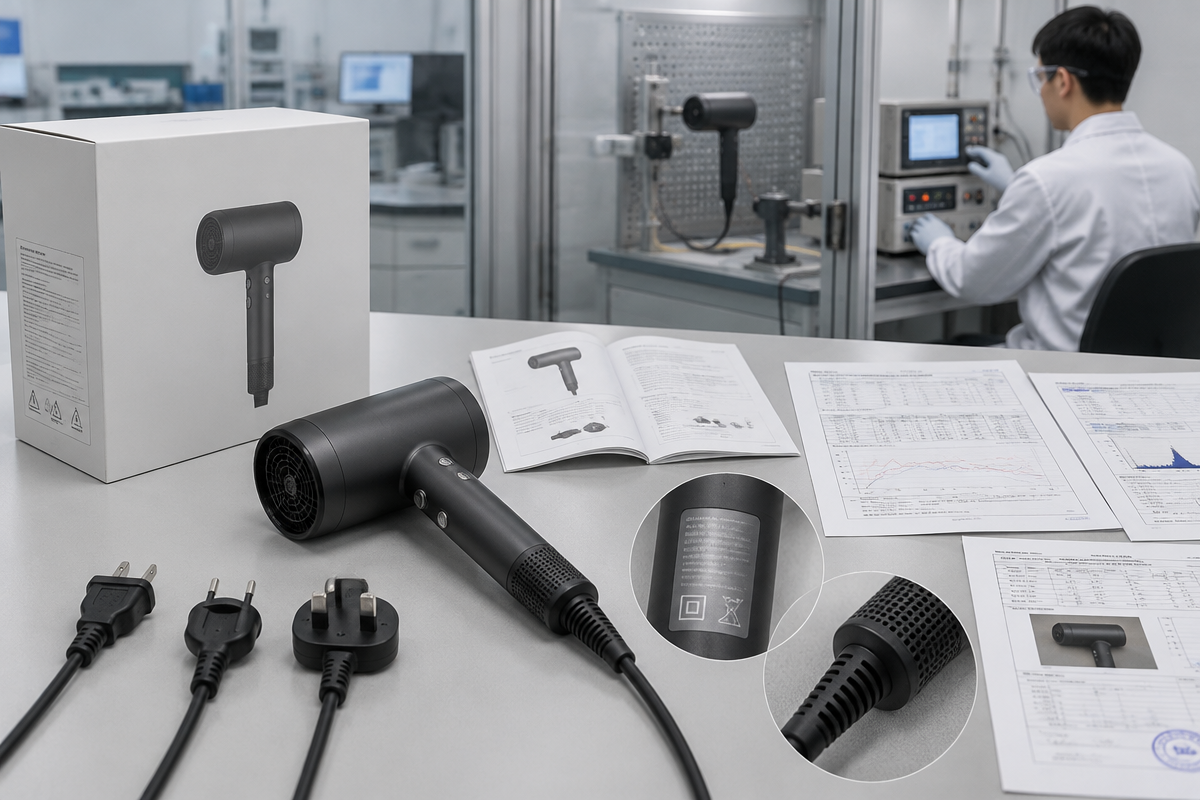
5. Review Documentation for the Exact Configuration
Ask for a documentation list linked to the selected model and intended market.
Check:
- Model numbers identified in each document.
- Applicant or manufacturer details.
- Standards and configurations covered.
- Whether the document relates to the finished product or a component.
- Whether proposed changes require further review or testing.
Do not assume documentation for a similar-looking product covers your order. Product labels, instructions, packaging, and the final configuration should also be reviewed against the requirements of your destination market and sales channel.
If design protection is part of the purchasing decision, request the relevant registration details. Confirm any proposed licensing or territory arrangements separately and in writing.
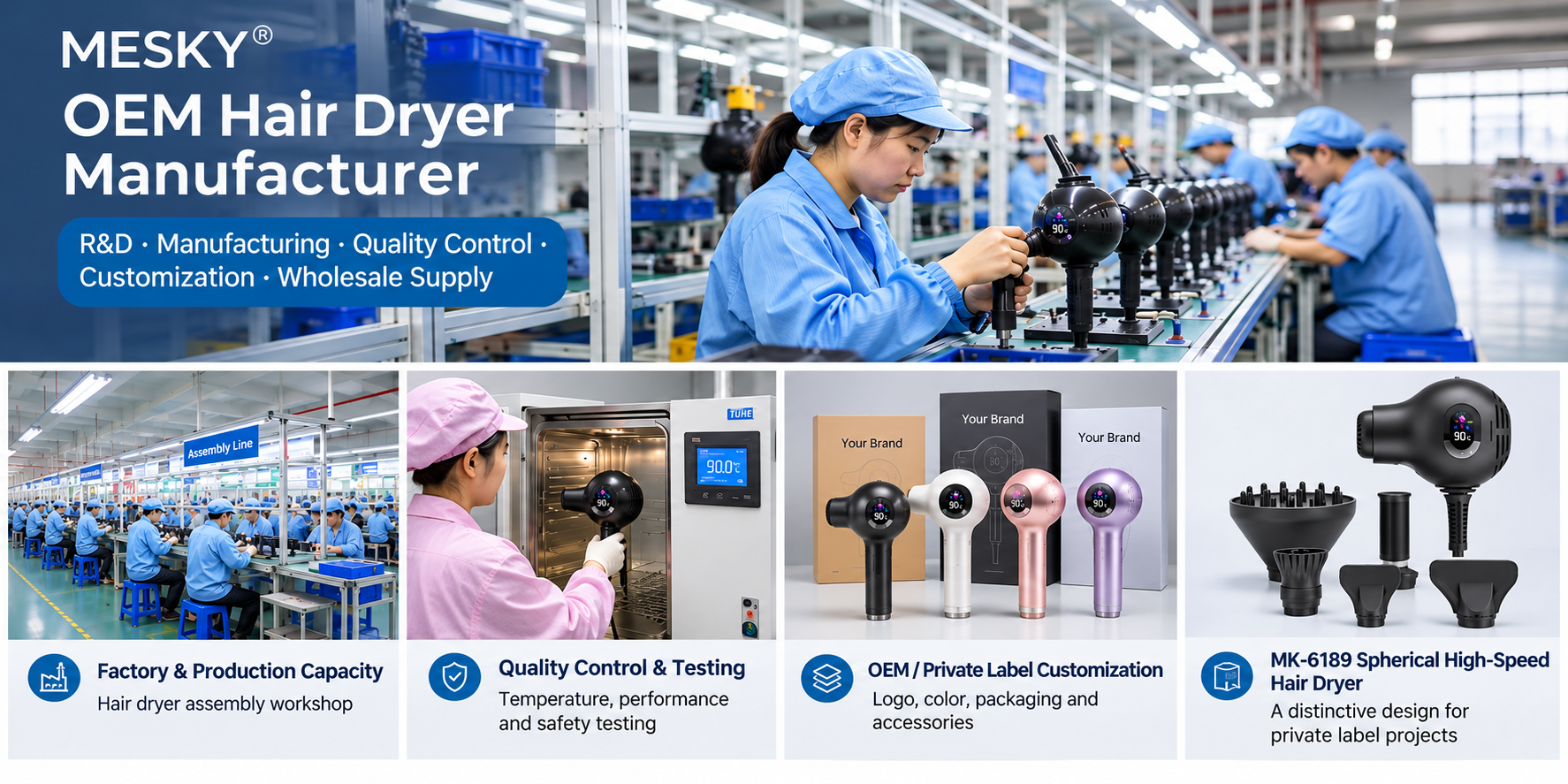
You can learn more about MESKY’s manufacturing and customization capabilities on our About Us page. Model-specific documentation should be confirmed during your sourcing discussion.
6. Compare Quotations on the Same Basis
A lower unit price may reflect differences in configuration, packaging, accessories, or service scope.
Ask each supplier to state:
- Quoted model and configuration.
- Minimum order quantity per model, color, or packaging version.
- Unit price and included items.
- Customization and development charges.
- Sample costs and shipping arrangements.
- Production lead time and the conditions that start it.
- Trade terms, payment terms, and quotation validity.
- Inspection and after-sales arrangements.
Discuss lead time alongside artwork approval, component availability, customization, and order quantity. Confirm whether the quoted schedule includes packaging preparation and final inspection.
7. Record Final Approval Before Production
Before authorizing production, confirm the agreed specification and approval records.
These should identify:
- Model and electrical configuration.
- Product color and surface finish.
- Logo artwork, position, and application method.
- Packaging and included accessories.
- Instructions and labels.
- Approved changes.
- Inspection requirements.
Keep a reference sample where appropriate and agree how the finished order will be checked against the approved requirements. Resolve outstanding questions before production begins.
Frequently Asked Questions
What information should I send when requesting an OEM quotation?
Include your target market, preferred product type, electrical configuration, estimated quantity, branding requirements, packaging needs, and launch schedule. Identify any specifications you still need help selecting.
Should I request a standard or customized sample?
A standard sample is useful for initial product evaluation. A customized sample helps you review agreed branding and appearance changes. Before production, confirm that the approval process covers the final configuration.
Can I compare samples using different temperature settings?
For a controlled comparison, use equivalent conditions where practical and record any differences. Different temperatures, section sizes, hair conditions, and techniques can affect the result.
Does an approved sample confirm product compliance?
Sample approval records your acceptance of the agreed product details. It does not replace the documentation review or specialist testing required for your market and configuration.
What determines the MOQ and production lead time?
These depend on the selected model, quantity, color, packaging, customization, material availability, and production schedule. Request confirmation for your specific project.
Discuss Your Automatic Hair Curler Project
A clear sourcing brief and a documented sample evaluation give your team a stronger basis for selecting a product and confirming an order.
If you are considering a 32mm automatic curler for your collection, explore the MK-2262 OEM and Private Label Options.
To discuss configurations, samples, and customization, contact MESKY with your target market, expected quantity, electrical requirements, branding needs, and launch schedule.
Last Updated on 11/06/2026 by sales04