Choosing the wrong supplier can turn a promising product launch into repeated delays and quality disputes. A clear evaluation process helps protect your brand.
Choose a private label hair tools manufacturer by checking its production capabilities, customization scope, sample quality, model-specific compliance evidence, commercial terms, and after-sales responsibilities. Compare suppliers against the same written requirements rather than relying on a low unit price or an impressive catalog.
At Mesky, we recommend treating supplier selection as a series of clear decisions. What product does your customer need? What must change to match your brand? What evidence will support your approval?
Whether you are developing a salon product line, expanding a retail range, or launching your first branded styling tool, the goal is the same: choose a partner whose capabilities match your project.
This guide explains what to ask, what to verify, and what to put in writing before placing a bulk order.
How Can You Verify a Hair Tools Manufacturer’s Real Capabilities?
A polished website can introduce a supplier, but it cannot answer every production question. We recommend checking who will actually make and support your product.
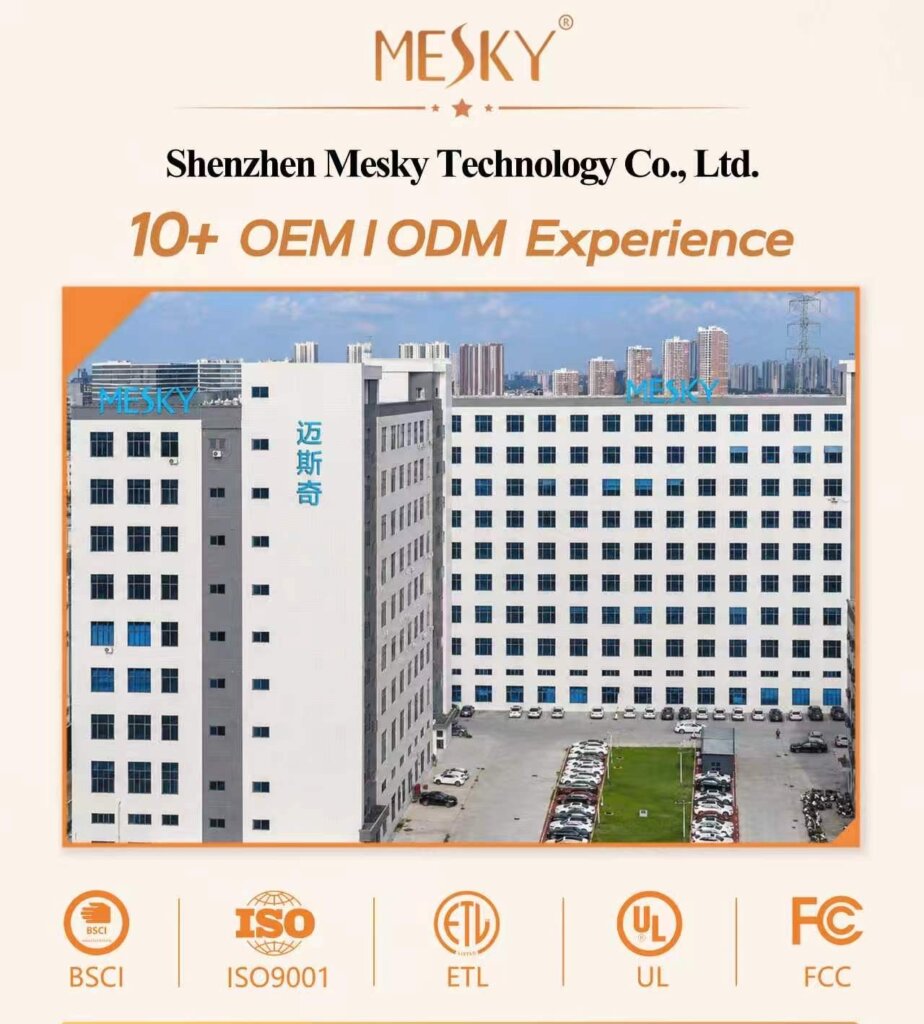
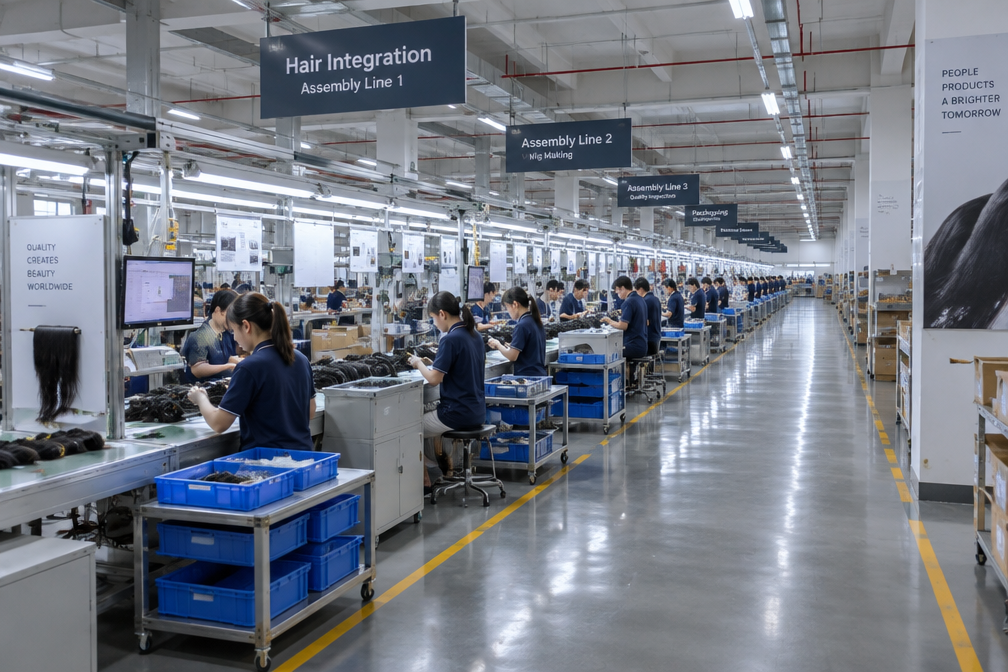
Ask the supplier to explain its role, identify the manufacturing site, and show evidence relevant to your product. Review production processes, engineering responsibilities, quality controls, and subcontracted work. Focus on accountability and project fit rather than treating the word “factory” as proof of quality.
Start with the product you want to buy
We suggest beginning with a specific product brief rather than a general question about factory size.
A supplier may offer a broad catalog, but your evaluation should focus on the exact product category and configuration you need. Ask which operations it performs directly and which operations involve outside partners.
For example, you may want to understand who handles product design, tooling, component purchasing, assembly, testing, and final shipment approval. Clear answers help you identify the party responsible when a change or problem occurs.
Request evidence that matches the claim
We recommend using the following questions to guide your review:
| Evaluation Area | What to Ask | Useful Evidence |
|---|---|---|
| Manufacturing role | Which operations do you perform directly? | Process map and production-site information |
| Product experience | Which current models are relevant to our project? | Model specifications and physical samples |
| Engineering support | Who reviews changes to structure or components? | Named technical contact and review process |
| Quality control | How are inspection results recorded? | Relevant, redacted inspection records |
| Outside production | Which processes use subcontractors? | Responsibility and approval arrangements |
Photographs and videos can support an introduction. We would not use them alone to approve a supplier. Where appropriate, request a live walkthrough, arrange a visit, or define the scope of an independent factory assessment.
Look for transparent responsibility
We would not reject a supplier simply because it uses outside partners. Instead, we would ask whether it explains those relationships clearly and remains accountable for agreed requirements.
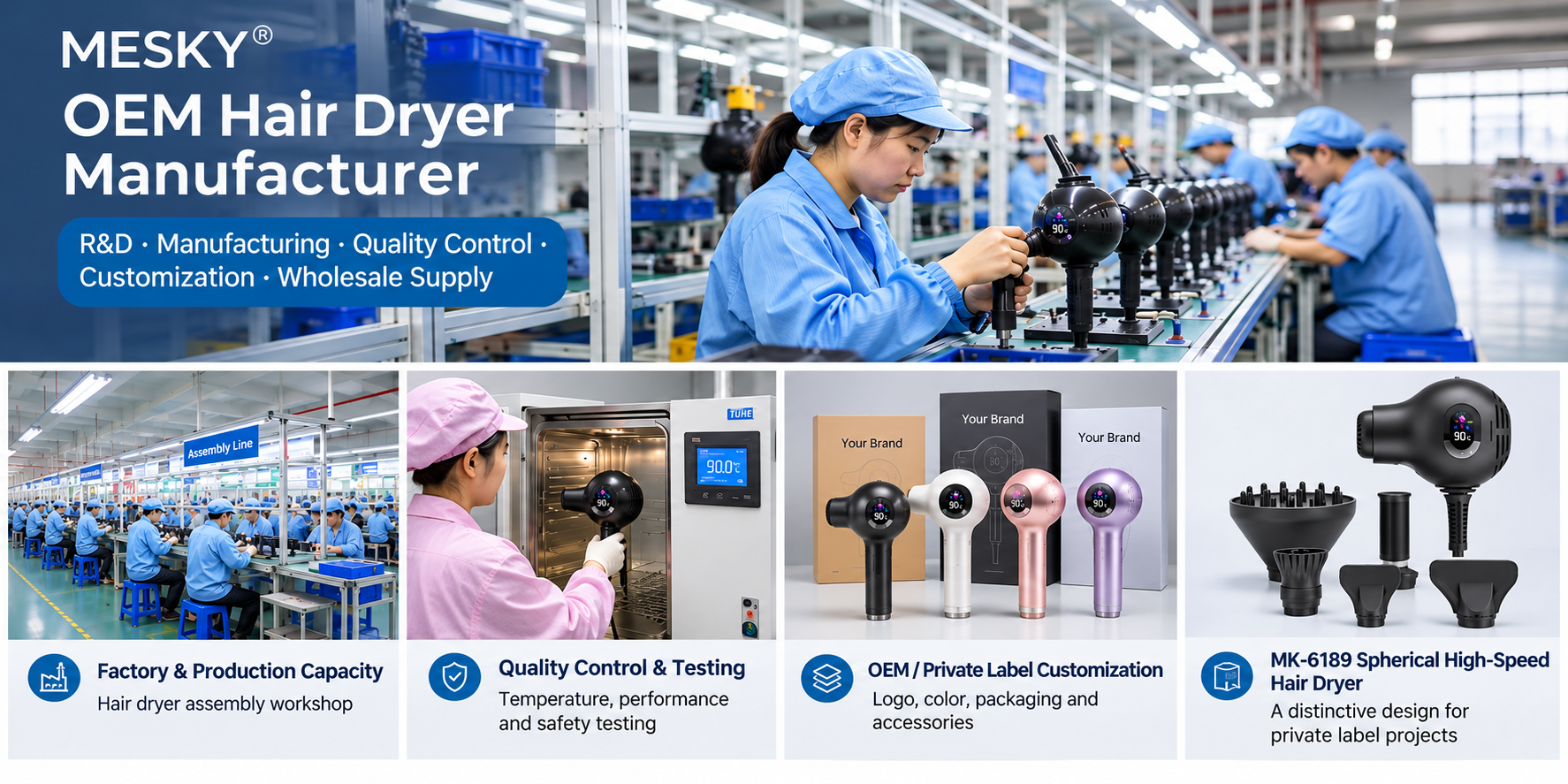
At Mesky, our manufacturing and customization overview introduces our product categories, customization options, and production processes. Use that information as a starting point, then request the evidence relevant to your proposed model.
What Customization Level and MOQ Should Your Brand Choose?
An unclear customization brief makes quotations difficult to compare. We recommend defining what must change before asking for a minimum order quantity.
Separate branding changes from product engineering changes. Ask for MOQ, sample requirements, development charges, and approval steps for each requested option. Confirm whether minimum quantities apply per model, color, component, or packaging design rather than assuming one MOQ covers the entire order.
Describe the work, not just the label
We recommend explaining your requirements in practical terms. Do not rely only on terms such as OEM, ODM, or private label.
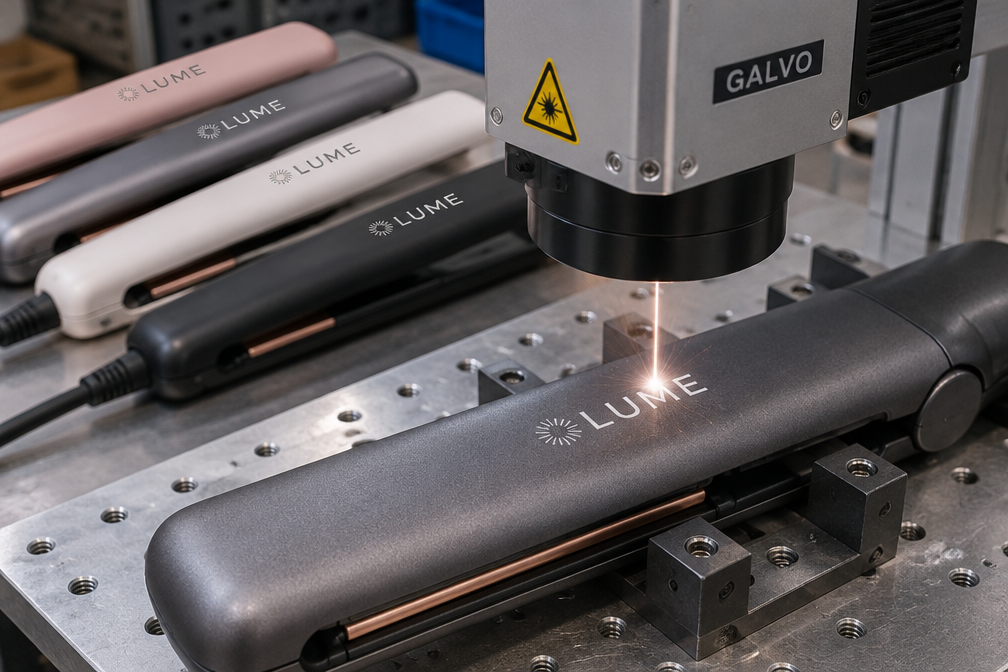
Do you want your logo on an existing model? A different body color? A revised accessory set? A change to the heater, controls, or housing? Each request should appear in the project brief so the supplier can confirm feasibility and responsibility.
Our preferred approach is to separate essential requirements from optional ideas. This gives you a clear base quotation and makes alternative configurations easier to evaluate.
Compare the options individually
| Customization Scope | Details to Confirm | Approval Material to Request |
|---|---|---|
| Logo and artwork | Position, size, color, and application method | Artwork proof and marked sample |
| Body color and finish | Color reference, texture, and accepted variation | Physical color sample |
| Packaging | Box structure, insert, printing, and included items | Packaging sample and artwork |
| Accessories | Compatibility, quantity, and identification | Complete sample set |
| Product changes | Engineering scope, validation, and ownership | Approved specifications and development plan |
We recommend requesting separate figures for product cost, sampling, tooling, packaging development, and other agreed charges. This makes it easier to understand which costs apply once and which apply to each order.
Match the order to your launch plan
We would avoid choosing a larger order solely to achieve a lower unit price. Review your available budget, planned channels, product range, and ability to support customers after launch.
If you are considering several colors or models, ask whether their minimum quantities are separate. Also confirm how packaging minimums affect the final order.
Start by reviewing our hair styling tools range and identifying the closest suitable models. A focused shortlist makes the customization discussion more useful than requesting every possible option at once.
How Should You Evaluate Product Development and Sample Approval?
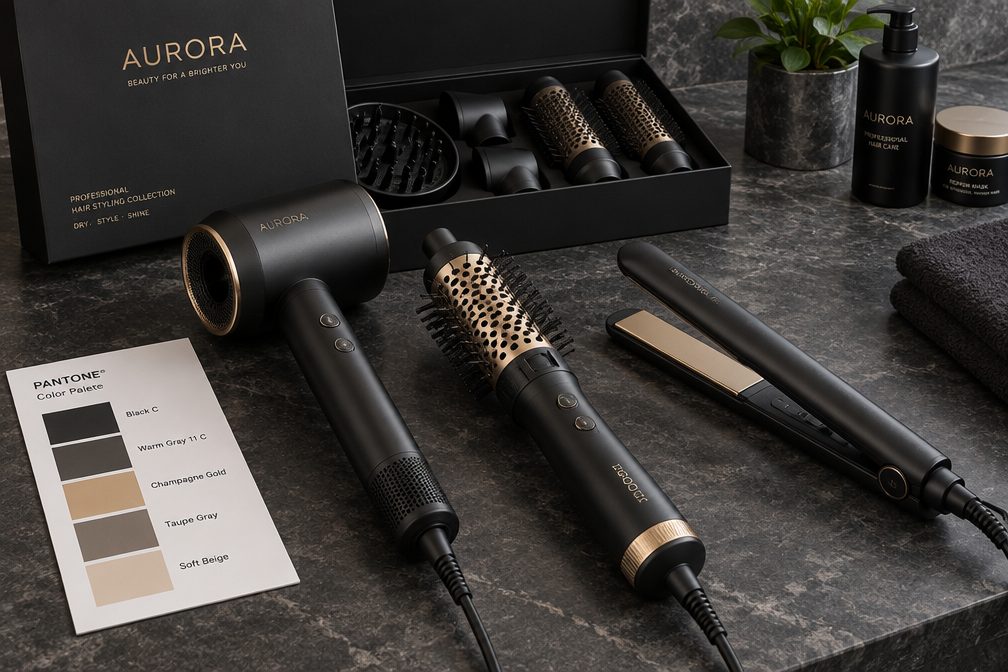
A good-looking sample can leave important questions unanswered. We recommend defining exactly what the sample represents before approving production.
Agree on specifications, sample stages, evaluation criteria, and written approval records. Identify differences between prototypes and production-intent samples. Before bulk production, confirm the approved product configuration, packaging, labeling, and process for handling later changes.
Give each sample a clear purpose
We suggest asking the supplier to identify the purpose and limitations of every sample.
Is it intended to show appearance, demonstrate a feature, or represent the proposed production configuration? Which materials, components, finishes, and accessories are final? Which details remain open?
This distinction matters during approval. You should not approve an unfinished feature by accident because the sample looked complete.
For private mold projects, we recommend defining review points for drawings, tooling, functional samples, and production preparation. Any timing commitments should refer to the actual project scope and approval dependencies.
Evaluate the sample against written requirements
We would use a structured evaluation sheet rather than a simple “approved” message.
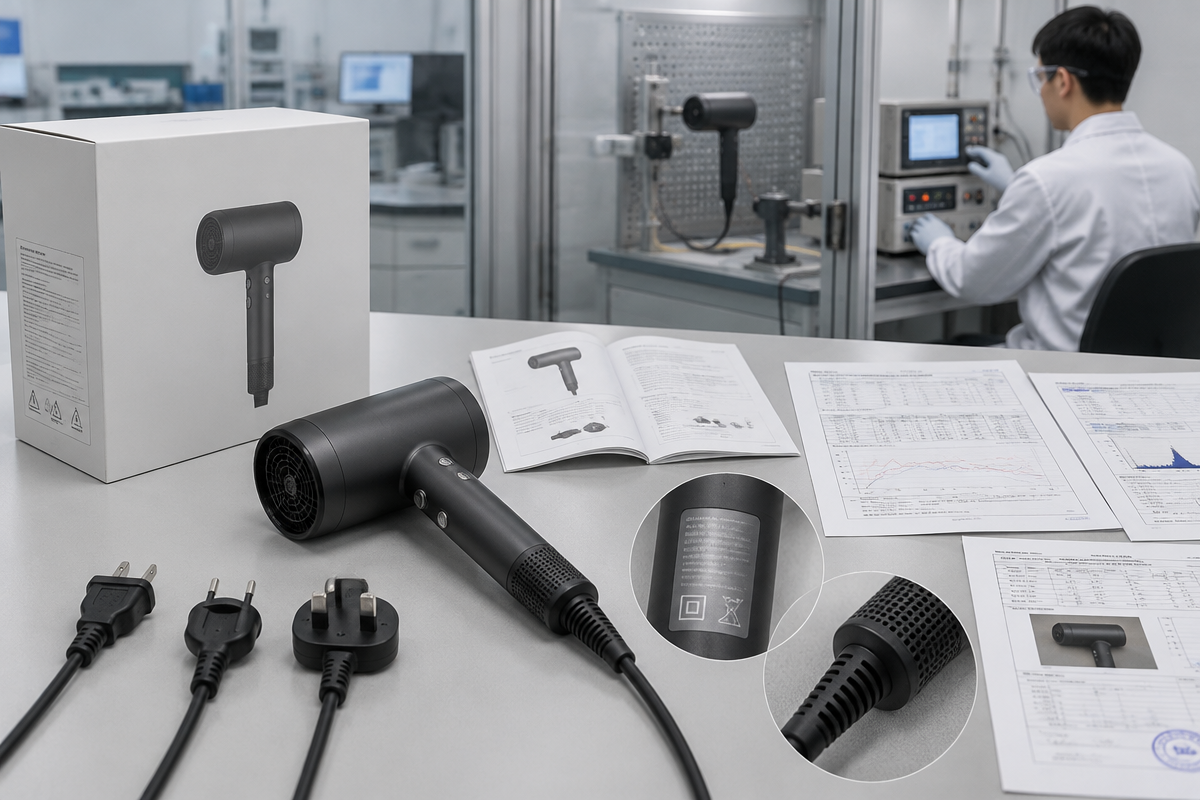
For a hair dryer, the sheet might record handling, control layout, attachment fit, and the documents supplied with the sample. For a straightener, it might cover plate alignment, hinge feel, control operation, and the agreed temperature evidence.
Your team should evaluate normal use only within the product’s instructions. Electrical safety, abnormal-operation testing, and other hazardous work should remain with qualified personnel using appropriate facilities.
Separate observations from conclusions. “The control is difficult to reach with this grip” is more actionable than “the product feels wrong.”
Record the approved configuration
We recommend keeping a signed specification and a clearly identified approved reference sample, often called a golden sample.
The record should identify:
- Product model and revision.
- Approved materials and components.
- Logo, color, and finish references.
- Accessories and packaging contents.
- Labeling and instruction versions.
- Remaining issues and their approval conditions.
Ask how later substitutions or changes will be reviewed. A component change should not disappear inside an informal message. We recommend a written review process that identifies the change, its possible effects, and the person authorized to approve it.
What Quality and Compliance Evidence Should You Request?
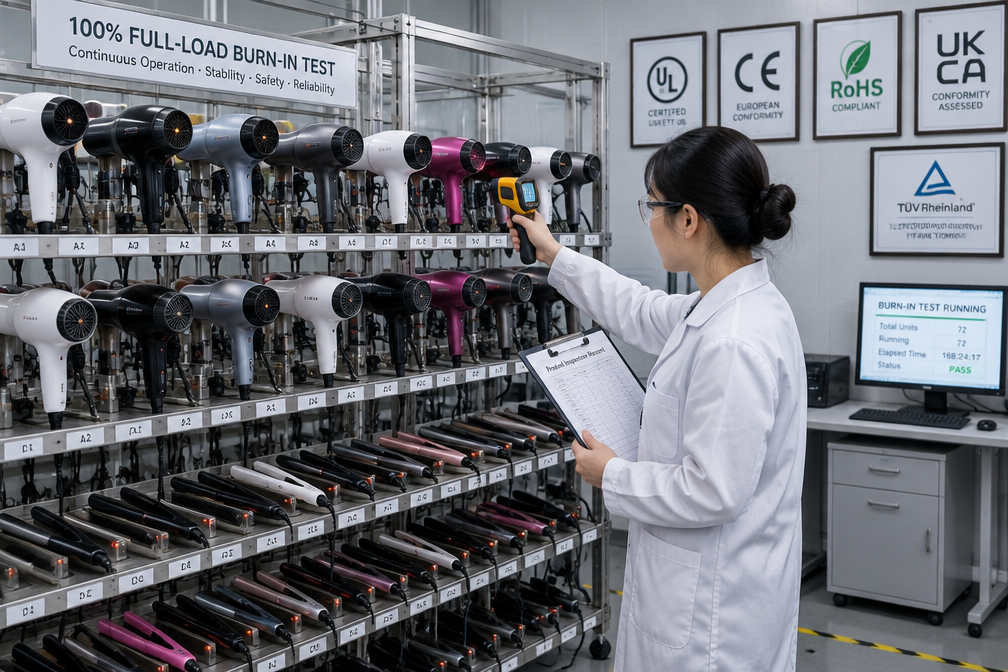
Broad claims such as “fully certified” leave too much unclear. We recommend asking which documents apply to the exact product and market.
Review quality records and compliance evidence separately. Check the product model, document holder, tested configuration, issuing organization, and scope. Confirm current requirements for your destination market with qualified professionals rather than assuming a supplier’s certificate list covers every product variant.
Separate product checks from market requirements
We recommend reviewing two related but distinct questions.
First, how will the supplier check that the order matches your approved specification? Second, what evidence supports the product’s suitability for the intended market?
A factory inspection record may help answer the first question. It should not automatically be treated as the answer to the second.
Likewise, a document associated with one model should not be assumed to cover a different heater, plug, component, or product configuration. Ask for a clear explanation of the applicable scope.
Make document review specific
| Review Item | Question to Resolve |
|---|---|
| Product identity | Does the document match the proposed model and configuration? |
| Document holder | Is the named organization relevant to the supply arrangement? |
| Scope | Which products, tests, or requirements does the document cover? |
| Source | Where can the document or its status be verified? |
| Product changes | Do the proposed changes require further assessment? |
| Open questions | Who is responsible for obtaining a qualified answer? |
We recommend resolving unclear documents before committing to production. A screenshot of a logo or the front page of a report is not enough for a complete review.
Agree on the order inspection plan
For order quality, we suggest agreeing on the inspection scope, defect descriptions, reporting format, and shipment-release process.
Identify which checks apply to incoming materials, production stages, and finished goods. Where sampling is used, agree on the sampling approach rather than assuming every unit receives every test.
Also ask how nonconforming products are separated, corrected, and reviewed before release.
At Mesky, our website outlines several inspection activities. For your project, request the records and procedures relevant to the selected model. We would not replace model-specific evidence with a general promise of zero defects, zero damage, or universal compliance.
How Can Packaging and Branding Support Your Product Positioning?
A product and its packaging should tell the same story. We recommend approving them together so important details do not conflict at launch.
Choose packaging around product protection, channel requirements, brand presentation, and customer use. Approve physical samples, artwork, inserts, instructions, and accessory placement. Do not assume a more expensive box will automatically create a stronger brand or higher profit.
Begin with the sales channel
We recommend describing how the product will reach its customer.
Will it appear on a retail shelf, ship directly to an individual buyer, or be supplied through a salon distributor? Share the receiving channel’s actual packaging and product-information requirements before approving the design.
The objective is not to create the most elaborate box. We suggest choosing a structure that presents the product clearly, holds the contents securely, and fits the agreed distribution plan.
Review the complete unboxing experience
We would inspect a physical packaging sample with the product and all included accessories inside.
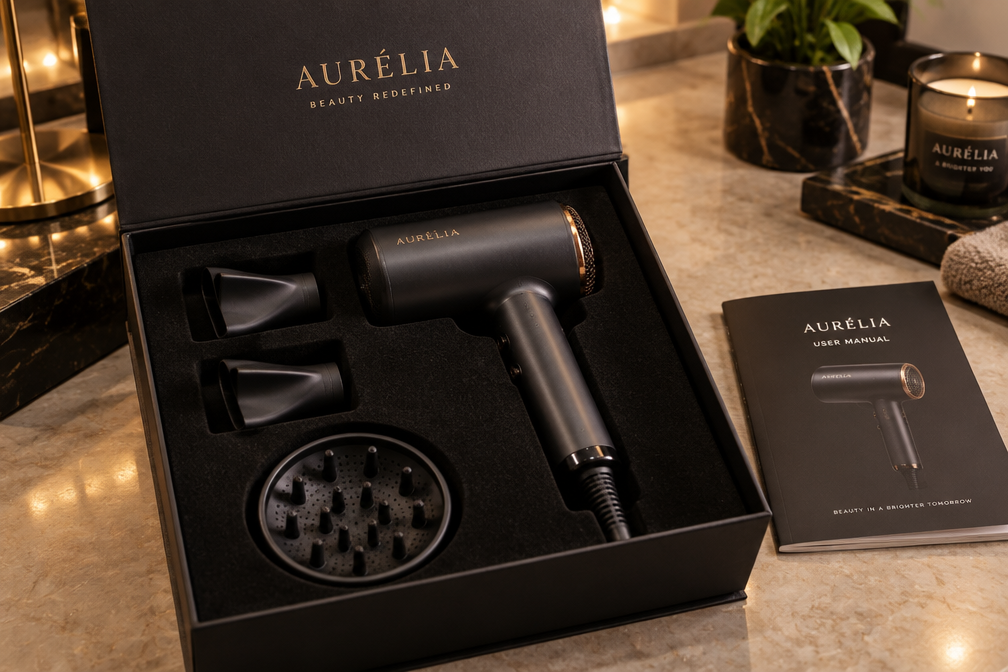
Check how each item is held, whether the contents match the printed list, and whether the customer can find the instructions. Review the fit of inserts and the placement of cords and attachments.
If protective performance is important to the shipping plan, agree on an appropriate packaging evaluation with qualified providers. Appearance approval alone should not be treated as proof of transport protection.
Mesky’s published packaging options include gift boxes, drawer boxes, magnetic boxes, and EVA cases. You can review these within our customization and packaging overview before discussing the right format for your project.
Keep branding consistent and supportable
We recommend using one approved reference set for the logo, product color, packaging artwork, and product information.
Check that the model name, included accessories, voltage information, and operating instructions match the actual configuration.
Pay particular attention to claims printed on the box. Statements about performance, materials, environmental benefits, or hair damage should have appropriate support.
Finally, define who owns and approves the artwork files. Keep the final versions clearly identified so a reorder does not accidentally use an outdated logo, instruction sheet, or packaging layout.
What Commercial Terms and After-Sales Responsibilities Should You Confirm?
A low quotation can hide unresolved responsibilities. We recommend reviewing the full order agreement before deciding which supplier offers the best fit.
Compare quotations using the same product specification and confirm payment milestones, production dependencies, shipping responsibilities, inspection release, warranty handling, and spare-parts arrangements. Record what is included, what is excluded, and how disputes or changes will be addressed.
Compare complete quotations
We recommend placing supplier quotations side by side only after checking that they describe comparable products.
Review the approved configuration, accessories, packaging, quantity, and destination requirements. A price comparison is less useful when one quotation includes a complete retail set and another covers only the main unit.
Use a checklist to identify missing items:
| Commercial Area | What We Recommend Confirming |
|---|---|
| Price scope | Product, accessories, packaging, tooling, and agreed services |
| Payment | Milestones, supporting documents, and approval responsibilities |
| Production timing | Start conditions, material availability, and approval dependencies |
| Shipment | Delivery terms, freight arrangements, and required documents |
| Quality release | Who reviews inspection results and authorizes shipment |
| After-sales support | Claim evidence, response process, and agreed remedies |
| Spare parts | Available items, compatibility, quantities, and supply terms |
We suggest asking for clarification rather than filling gaps with assumptions. The same principle applies to quote validity and the conditions that may trigger revised pricing.
Define the after-sales process before launch
We would ask how a product issue should be reported and what evidence the supplier needs.
Agree on the contact person, product identification, photos or records, and the process for reviewing a claim. Clarify which remedies may apply and who is responsible for related shipping or handling costs.
Do not assume that “warranty included” explains all of these details. Commercial warranty arrangements and any obligations in your selling market should be reviewed separately.
Make the final decision with open issues visible
We recommend keeping a short supplier comparison sheet that records strengths, limitations, evidence received, and unresolved questions.
The right partner is not necessarily the supplier with the longest feature list. We would prioritize a clear match between your requirements and the supplier’s demonstrated capabilities, supported by written approvals.
To discuss a Mesky project, send us your private label hair tool requirements. Include your target market, preferred product, customization needs, expected order quantity, and intended launch window so we can review the scope.
Conclusion
Choose a manufacturer whose evidence matches your requirements. We recommend approving specifications, samples, responsibilities, and support terms before committing to a private label hair tools order.
Last Updated on 10/27/2026 by sales04